Mobile Crypto Horse Racing Betting: Apps, Browsers, and On-Course Use
 Available in US
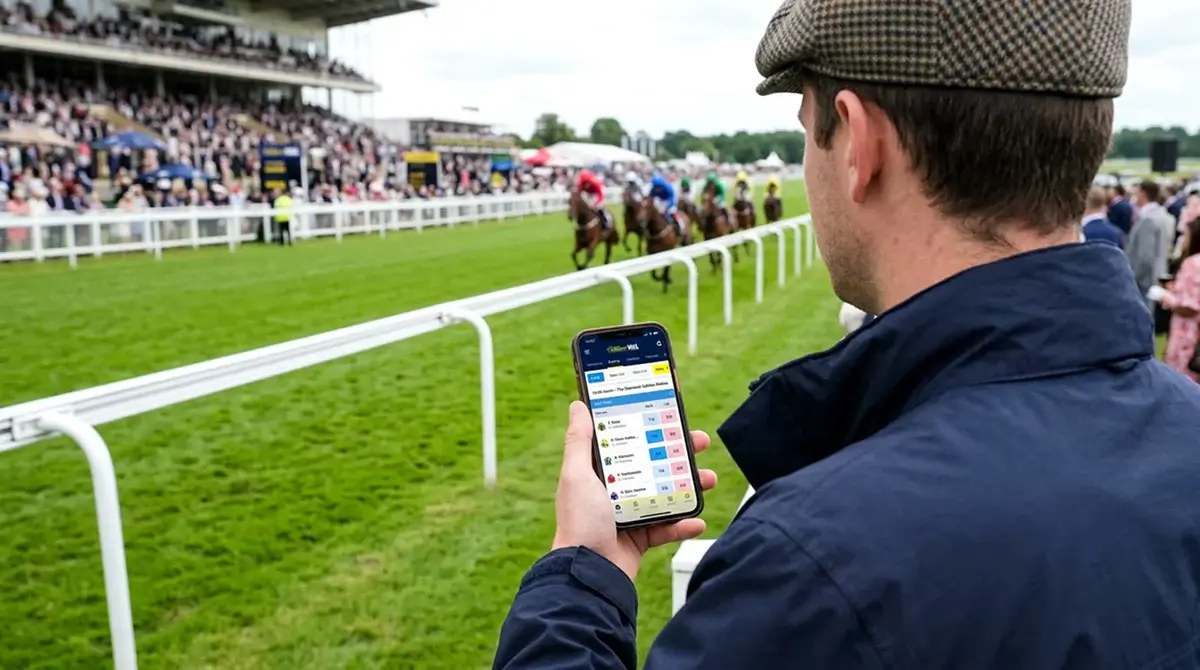
Live betting accounts for 53.4% of all online wagering activity, per DemandSage data from early 2026, and the overwhelming majority of that live action happens on phones. For crypto horse racing bettors, mobile is not a secondary channel – it is the primary interface. But the mobile experience at crypto racebooks lags behind what UK punters are used to from the major licensed bookmaker apps, and the gap becomes most apparent at the one place where mobile betting matters most: the racecourse itself.
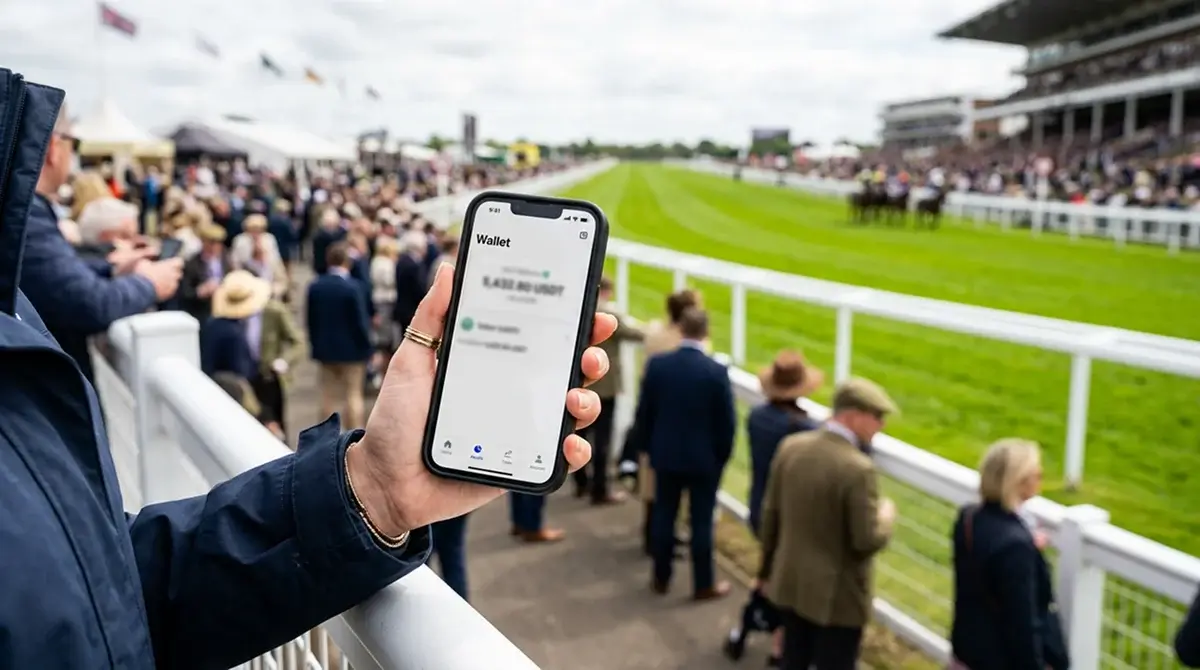
I have placed crypto bets from my phone at Ascot, Cheltenham, Kempton, and half a dozen smaller tracks over the past two years. The experience has improved significantly, but there are still practical obstacles that desktop-only bettors never encounter. This guide covers what works, what does not, and how to prepare your mobile setup before you arrive at the course.
Native Apps vs Mobile Browsers for Crypto Racing
Most crypto racebooks do not offer native iOS or Android apps. Apple’s App Store policies restrict real-money gambling apps to operators licensed in their operating jurisdiction, which excludes the majority of offshore crypto sportsbooks. Google Play has loosened its restrictions somewhat, but most crypto platforms have not invested in native Android app development. The result is that mobile betting at crypto racebooks happens almost exclusively through the mobile browser.
The browser experience varies enormously. The best crypto racebooks have responsive designs that adapt cleanly to mobile screens, with bet slips that overlay the odds display without requiring a page change, quick-deposit buttons that link to your funded account balance, and race cards that load within two seconds on a 4G connection. The worst feel like desktop sites viewed through a narrow window – tiny text, horizontal scrolling, and deposit pages that require switching between apps to copy wallet addresses.
A practical workaround is to add the racebook’s mobile site to your home screen as a Progressive Web App, where the platform supports it. PWAs launch like native apps, run in a full-screen browser without address bar clutter, and can cache certain elements for faster loading. Not every crypto racebook offers PWA functionality, but the ones that do provide a noticeably smoother mobile experience than the standard browser tab approach.
For wallet management on mobile, I use a dedicated betting wallet app on the same phone. This keeps the deposit workflow self-contained: tap the racebook’s deposit page, copy the deposit address, switch to the wallet app, paste the address, confirm the transaction. The entire process takes under thirty seconds on a stable connection. Using the same phone for both wallet and racebook eliminates the need for a second device, though it concentrates risk – if your phone is lost or compromised, both your wallet and racebook accounts are exposed.
Connectivity Challenges at UK Racecourses
Mobile data performance at UK racecourses is the single biggest practical obstacle to on-course crypto betting. Major meetings attract tens of thousands of people into a concentrated area, and mobile network infrastructure at most tracks was not designed for that density. I have measured effective data speeds dropping below 1 Mbps at Cheltenham during the Gold Cup card, barely adequate for loading a simple web page, never mind placing a time-sensitive in-play bet.
The problem compounds at the critical moment. The period between the horses loading into the stalls and the off – the window where pre-race in-play markets offer the most value – is exactly when everyone at the course is reaching for their phone. Network congestion peaks precisely when you most need it to be clear. I missed a 7/1 winner at the 2024 Festival because my bet placement timed out twice during those forty seconds of network gridlock.
Preparation mitigates some of this. Pre-load your racebook’s page before each race, do not navigate fresh from the home screen when the horses are already at the start. Pre-fund your racebook balance before you arrive at the course, ideally the night before, so that no on-chain deposit needs to occur during the meeting. AI-adjusted odds models now reprice 35% faster than traditional approaches, per Congruence Market Insights data, which means the window between price changes at crypto racebooks is narrower than ever. On a congested network, you cannot afford the extra seconds of loading a deposit page mid-session.
Some regular racegoers carry a portable Wi-Fi hotspot that connects via a different mobile network to their phone’s SIM, providing a backup connection when the primary network is saturated. This is overkill for casual attendance but practical for anyone who treats on-course crypto betting as a regular activity at major meetings.
Deposit and Withdrawal on Mobile
The mobile deposit workflow has one significant friction point that desktop does not: copying blockchain addresses between apps. A deposit address is a long string of alphanumeric characters – one mistyped character sends funds to a wrong or non-existent address. On desktop, copy-pasting is straightforward. On mobile, the paste sometimes picks up extra whitespace, or the address truncates if the input field is not sized correctly. Always verify the first and last six characters of the pasted address against the original before confirming any mobile deposit.
QR codes eliminate this risk entirely. Many crypto racebooks display a QR code alongside the text deposit address, which your wallet app can scan directly. No typing, no copying, no paste errors. If your racebook offers QR-based deposits, use them exclusively on mobile, it is the single most reliable method for ensuring the address is correct.
Withdrawals on mobile follow the same process as desktop: enter your wallet address, specify the amount and network, and confirm. The key mobile-specific consideration is security. Initiating a withdrawal on a public Wi-Fi network at a racecourse bar is a risk that is easy to overlook after a winning afternoon. Use mobile data rather than public Wi-Fi for any transaction involving your betting account or crypto wallet, and confirm that your racebook connection shows HTTPS before entering any credentials or initiating financial actions.
Building a Reliable Mobile Betting Setup
The ideal mobile crypto racing setup is boring by design – reliability matters more than features. A phone with current software updates, a dedicated wallet app with biometric authentication, a racebook bookmarked as a home screen PWA, a pre-funded platform balance, and a battery pack for long race days. That combination handles ninety percent of on-course scenarios without any mid-session troubleshooting.
Battery is the overlooked variable. Crypto wallet apps, mobile browsers running racebook sites, and live streaming of races all draw significant power. A phone that starts the day at full charge can be below twenty percent by the fourth race if streaming is running continuously. Low battery triggers power-saving modes that throttle network performance and slow app responsiveness, exactly the conditions that cause bet placements to fail at the worst moment. A portable battery pack is as essential as a race card for crypto bettors who spend full days at the track.
The mobile crypto racing experience is imperfect but improving. Each year brings better responsive designs, faster mobile networks at courses, and more wallet apps with seamless integration. For now, the bettors who succeed on mobile are the ones who prepare before the first race rather than troubleshooting between the second and third. A well-prepared security setup extends naturally from desktop to mobile – the principles are identical, even if the screen is smaller.
Do crypto racebooks have mobile apps for iPhone or Android?
Most crypto racebooks do not offer native apps due to App Store restrictions on unlicensed gambling operators. Mobile betting happens through the browser, with some platforms supporting Progressive Web Apps that can be added to your home screen for a more app-like experience. Check whether your preferred racebook offers PWA support, as the experience is significantly smoother than a standard browser tab.
How do I avoid connectivity problems when betting with crypto at a racecourse?
Pre-fund your racebook balance before arriving at the course, ideally the evening before. Pre-load the racebook page before each race rather than navigating fresh. Consider a portable Wi-Fi hotspot on an alternative network as backup at major meetings where mobile data congestion is severe. Avoid streaming races on the same device you use for bet placement, as streaming consumes bandwidth and battery that affect bet submission speed.
Learn more about horse racing crypto betting on our main page.
You may also find NFT Racehorse Ownership: Tokenised Horses and Earning Potential interesting.
Created by the ”Horse Racing Crypto Betting” editorial team.