
Crypto vs Fiat Horse Racing Betting: Honest Comparison
 Available in US
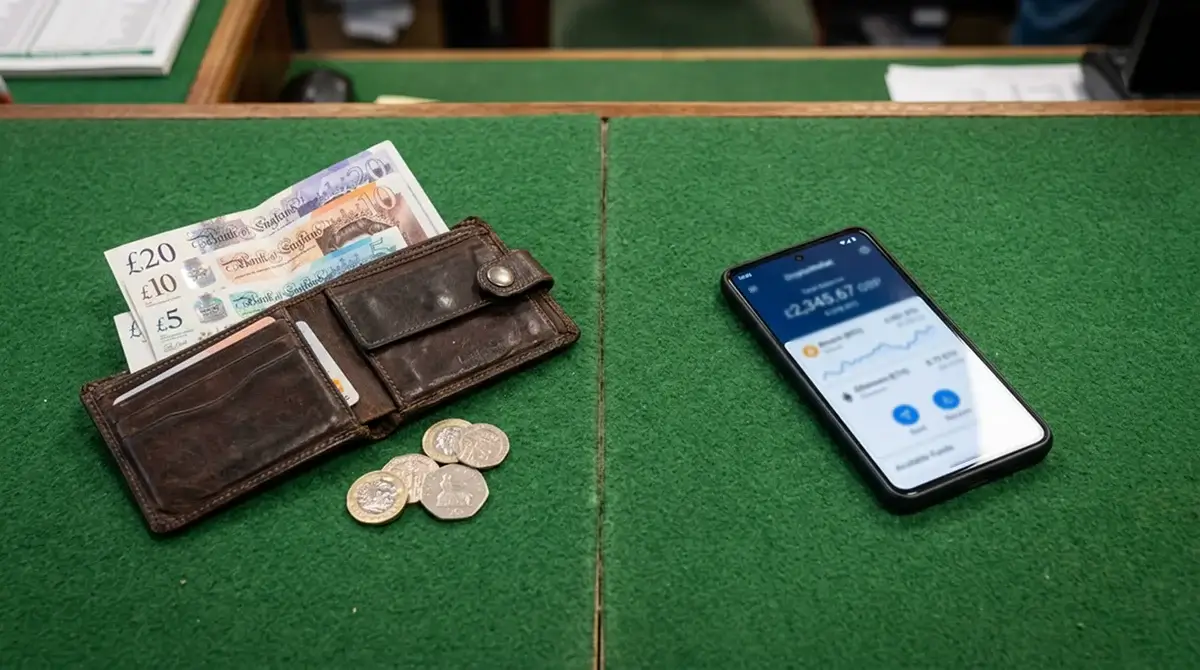
In the UK, 56% of gambling revenue now comes from online channels, according to DemandSage data for early 2026. That figure represents a market where fiat payment methods – debit cards, bank transfers, e-wallets – have been the default for two decades. Crypto is the challenger, and framing the comparison honestly means acknowledging that each side wins on different dimensions. There is no outright winner here. There is a set of trade-offs that every horse racing bettor should understand before choosing how to fund their account.
I have run accounts on both sides of this divide for four years, traditional UK bookmakers funded by debit card alongside offshore crypto racebooks funded by USDT and BTC. The practical differences are sharper than most comparison articles suggest, because they extend beyond speed and fees into areas like consumer protection, dispute resolution, and what happens when things go wrong.
Transaction Speed, Fees, and Limits Compared
Speed is where crypto’s advantage is most visible. A USDT deposit on the Tron network typically confirms in under thirty seconds. A Bitcoin deposit takes ten to forty minutes depending on network congestion. Compare that to a UK bank transfer, which can take one to three business days to clear at a traditional bookmaker, or even a debit card deposit that, while faster, still processes through payment intermediaries that occasionally flag gambling transactions.
Withdrawals sharpen the contrast further. Most UK-licensed bookmakers process debit card withdrawals within one to five business days, with some adding a manual review period that extends the wait. Crypto racebooks that process withdrawals on-chain typically complete the transaction within hours, some within minutes. Tim Miller, the UK Gambling Commission’s Executive Director of Research and Policy, noted in early 2026 that allowing regulated companies to accept crypto could keep consumers within the licensed system rather than driving them to offshore sites. That observation implicitly acknowledges the speed gap that crypto offers.
Fees tell a more nuanced story. Fiat deposits at UK bookmakers are generally free, operators absorb the payment processing costs. Crypto deposits carry network fees that vary by blockchain: near-zero on Tron, a few pence on Litecoin, potentially several pounds on Ethereum during congestion. For small stakes, crypto network fees can represent a meaningful percentage of the deposit. For larger amounts, the percentage shrinks to insignificance. Withdrawal fees follow a similar pattern, fiat withdrawals at UK bookmakers are usually free, while crypto withdrawals may incur both a network fee and a platform processing fee.
Deposit and withdrawal limits diverge too. UK-licensed bookmakers impose regulatory-driven limits tied to affordability checks, high-spending customers may be asked to verify income sources, and accounts can be restricted if spending patterns trigger concern. Crypto racebooks generally impose higher deposit limits and lower withdrawal minimums, with fewer questions asked. The crypto casino industry processed at least $81 billion in wagers during 2025, per MEXC News and CoinRepublic reporting, and that volume partly reflects the higher ceiling that crypto platforms offer high-volume bettors.
Consumer Protection and Dispute Resolution
This is where fiat – specifically, UK-licensed fiat betting – holds an advantage that no amount of crypto speed can offset. A UKGC-licensed bookmaker must segregate customer funds, participate in Alternative Dispute Resolution schemes, comply with the self-exclusion programme GamStop, and meet strict anti-money-laundering requirements. If a dispute arises, you have a regulatory body with enforcement powers standing behind you.
Crypto racebooks operating under offshore licences, Curaçao, Anjouan, or similar jurisdictions, provide none of these protections at a comparable level. Fund segregation is not guaranteed. Dispute resolution may consist of an email to customer support with no independent oversight. Self-exclusion tools, if they exist, are voluntary and platform-specific rather than industry-wide. And if the platform refuses to pay a legitimate winning bet, your recourse is effectively limited to complaining publicly and hoping the reputational pressure motivates action.
I have experienced both sides of this. A UK bookmaker once voided a bet I placed on a horse race due to what they claimed was a pricing error. I escalated through their complaints process and then to the Independent Betting Adjudication Service. The process took six weeks, but the ruling went in my favour and the bookmaker paid. When a crypto racebook delayed a withdrawal for ten days without explanation, my options were a support ticket and patience. There was no independent body to escalate to, no regulatory threat to invoke.
For bettors who value recourse over speed, fiat on a UK-licensed platform remains the safer choice. For bettors who prioritise transaction freedom and accept the responsibility that comes with reduced oversight, crypto offers flexibility that the regulated market currently cannot match.
Privacy, Data, and Betting Records
Fiat betting at UK-licensed bookmakers generates a comprehensive data trail. Your debit card transactions appear on bank statements. Your betting activity is logged by the operator and shared with regulatory bodies as required. Affordability checks may involve open banking access to your financial records. If you self-exclude via GamStop, that exclusion is recorded and shared across all UKGC-licensed operators. For some bettors, this transparency is a safeguard. For others, it represents an intrusion into financial privacy that feels disproportionate.
Crypto betting inverts the privacy equation. Deposits and withdrawals are recorded on the blockchain but linked to wallet addresses rather than personal identities. At no-KYC platforms, no personal data is collected at all. Your bank sees a crypto exchange purchase, not a gambling deposit. No affordability check examines your income. No betting record follows you from platform to platform.
The privacy advantage of crypto is real, but it comes with a cost that is easy to overlook in the moment: you lose the safety net. GamStop exists because some bettors need help stopping. Affordability checks exist because some spending patterns indicate harm. By moving to crypto, you opt out of both the surveillance and the protection simultaneously. For the majority of recreational bettors, this trade-off is manageable. For anyone with a history of problem gambling, the absence of these safeguards is a genuine risk.
Ultimately, the choice between crypto and fiat for horse racing betting is not about which is better in the abstract, it is about which set of trade-offs aligns with your priorities. Speed and privacy on one side. Protection and recourse on the other. The honest answer is that neither system has solved the entire problem yet, and the most interesting development on the horizon is the UKGC’s exploration of allowing crypto within the licensed, regulated framework, which would combine the strengths of both.
Is crypto horse racing betting faster than using a debit card at a UK bookmaker?
For deposits, crypto on fast networks like Tron confirms in under thirty seconds, while debit card deposits process within minutes but occasionally face delays from payment provider checks. For withdrawals, the difference is more significant: crypto withdrawals often complete within hours, while debit card withdrawals at UK bookmakers typically take one to five business days.
Do crypto bets appear on bank statements?
Crypto betting transactions do not appear on bank statements as gambling activity. Your bank will see a purchase from a cryptocurrency exchange if you buy crypto with fiat, but the subsequent transfer to a betting site is a blockchain transaction between wallet addresses with no reference to gambling. This privacy is one reason some bettors prefer crypto, though it also means opting out of bank-level spending monitoring.
Discover everything about horse racing crypto betting here.
Check out our guide on Ethereum Horse Race Betting: ETH Platforms and Gas Fees as well.
Created by the ”Horse Racing Crypto Betting” editorial team.