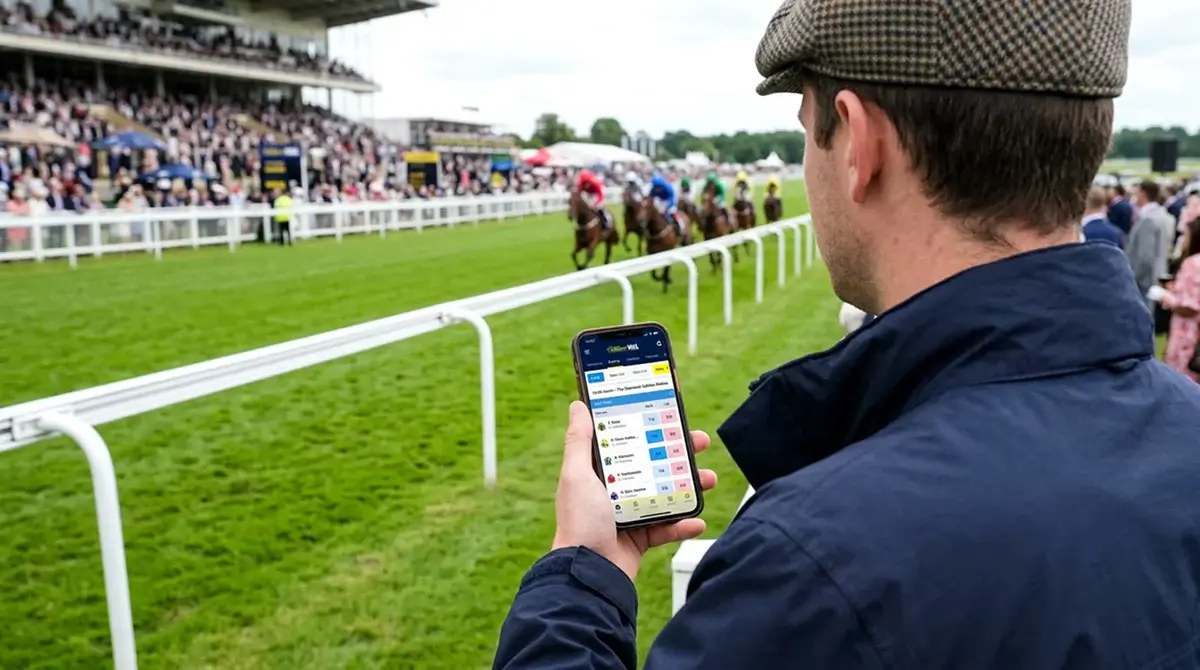
Virtual Horse Racing Crypto Betting: RNG Races and Provably Fair Markets
 Available in US

Virtual horse racing runs twenty-four hours a day, seven days a week, with no weather delays, no stewards’ enquiries, and no horses that refuse to enter the stalls. A new race starts every two to five minutes at most crypto platforms, generating results through random number generators rather than live athletic competition. For crypto bettors who arrived at a racebook expecting to find UK afternoon cards and instead discovered a library of virtual races running continuously, the product can be confusing, part gambling, part algorithmic entertainment, and entirely different from the real thing.
Crypto casinos now constitute approximately 17% of all iGaming globally, per Surgence Labs data, and virtual sports are one of the product categories driving that share. Virtual horse racing sits at the intersection of the casino and sportsbook – it looks like racing, uses racing terminology, and presents odds in racing formats, but the outcome is determined by software rather than hooves. Understanding what you are actually betting on is the starting point for deciding whether it belongs in your crypto racing strategy.
How Virtual Horse Racing Generates Results
Every virtual horse race is determined by a random number generator, a software algorithm that produces an unpredictable sequence of numbers mapped to race outcomes. The RNG assigns each virtual horse a probability of winning based on its displayed odds, generates the result, and renders a visual animation that plays out in thirty to sixty seconds. The animation is purely cosmetic, the result is determined before the visual race begins.
This is the fundamental difference from real horse racing. In a live race, the outcome is unknown until the horses cross the line. Form, fitness, conditions, and jockey decisions all influence the result in real time. In a virtual race, the result exists the moment you place your bet. The animated race you watch is a replay of a predetermined outcome, not a live competition. No amount of form study, paddock observation, or going preference analysis will improve your virtual racing results, because there is no form to study – each race is statistically independent of every previous race.
The odds displayed for virtual horses reflect their RNG probabilities. A horse priced at 3/1 has approximately a 25% chance of winning, built into the algorithm. Over thousands of races, the actual win rate will converge toward that probability. The operator’s margin is embedded in the odds structure, the sum of all implied probabilities in a virtual race exceeds 100%, and that overround is the house edge. Typical overrounds in virtual racing range from 115% to 130%, meaning the house takes 15-30% of the pool in expected value terms, significantly higher than the 5-10% overround on competitive real racing markets.
Provably Fair Virtual Racing at Crypto Sites
Virtual horse racing is one area where provably fair technology applies fully and meaningfully. Because the outcome is generated algorithmically, the entire chain from server seed to race result can be committed cryptographically before the bet is placed and verified independently afterward. This is the provably fair application that crypto betting was designed for – mathematical proof that the operator did not alter the result after seeing your wager.
Blockchain-based settlement systems are projected to reduce transaction errors by 22% by 2028, according to Congruence Market Insights, and provably fair virtual racing is a specific implementation of that broader principle. When a crypto racebook offers provably fair virtual races, you can verify that the server seed was committed before your bet, that the RNG computation was executed correctly, and that the displayed result matches the algorithmic output. This verification does not guarantee you will win, the house edge remains, but it guarantees the game is not rigged against you beyond the stated odds.
Not every crypto platform that offers virtual racing implements provably fair verification. Some use third-party virtual racing suppliers whose RNG is certified by independent testing laboratories but not cryptographically verifiable by the bettor. Others offer no transparency at all. If provably fair matters to you, check whether the virtual racing section includes seed verification tools. Their presence indicates genuine transparency. Their absence means you are trusting the operator’s claims rather than verifying them independently, which is the same trust model that provably fair technology was invented to replace.
Virtual vs Real Racing: When Each Makes Sense
Virtual horse racing is not a substitute for real racing. It is a different product that shares visual aesthetics and terminology but operates on entirely different principles. Treating virtual racing as a replacement for live UK racing, expecting form analysis to matter, expecting odds to reflect anything beyond algorithmic probability, leads to frustration and losses that could have been avoided with correct expectations.
Virtual racing serves a specific purpose in a crypto bettor’s toolkit: it provides betting opportunities outside of live racing hours. UK flat racing runs primarily from April to October, with the main card typically between 1 PM and 5 PM. Jump racing extends the season but still follows a daytime schedule. Virtual racing fills the gaps, late evening, early morning, and the quiet months when live racing is sparse. For a bettor who wants action outside of live hours and accepts the higher house edge as the cost of access, virtual racing is a reasonable option in small doses.
The key is proportion. Virtual racing should represent a small, budgeted portion of your overall betting activity, a way to scratch the itch during a quiet evening, not a primary source of wagering volume. The higher overround means the expected loss rate per unit staked is significantly greater than live racing at competitive odds. A bettor who allocates the same bankroll share to virtual racing as to live racing is overpaying for entertainment relative to the value available in real markets.
The global horse racing market is valued at $491.7 billion according to Deep Market Insights, and the virtual segment is growing within that broader figure as platforms invest in higher-quality animations and more varied race formats. For crypto bettors, the appeal is access – no schedule dependency, no oracle latency for settlement, no stream delays. The trade-off is transparency about what you are betting on: a random number generator dressed as a horse race, with a house edge that reflects the convenience of constant availability.
Is virtual horse racing rigged at crypto betting sites?
At platforms with provably fair verification, you can independently confirm that the RNG outcome was determined before your bet and was not altered afterward. At platforms without provably fair tools, you are relying on the operator’s integrity and any third-party certification they hold. The house edge in virtual racing is typically 15-30%, built into the odds structure – this is the stated mathematical advantage, not rigging. Provably fair verification confirms the game operates within those stated parameters.
Can I use form analysis to improve my results in virtual horse racing?
No. Each virtual race is generated independently by a random number generator with no connection to previous results. There is no form, no going preference, no fitness trajectory, and no jockey skill. The odds reflect the algorithmic probability assigned to each virtual horse, and no external analysis can identify patterns that improve on those probabilities. Form study, tipsters, and racing knowledge apply exclusively to real horse racing.
Learn more about horse racing crypto betting on our main page.
You may also find Cookie Policy interesting.
Written by the editors at Horse Racing Crypto Betting.