Bitcoin Horse Racing Betting: BTC-Specific Platforms and Tips
 Available in US
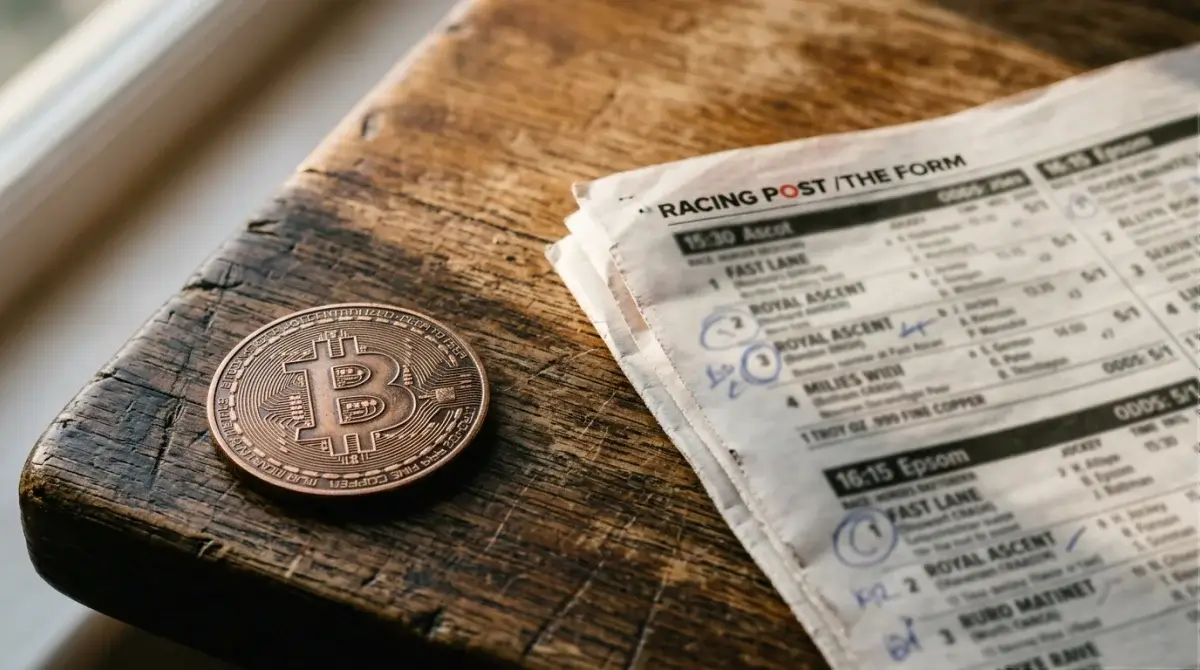
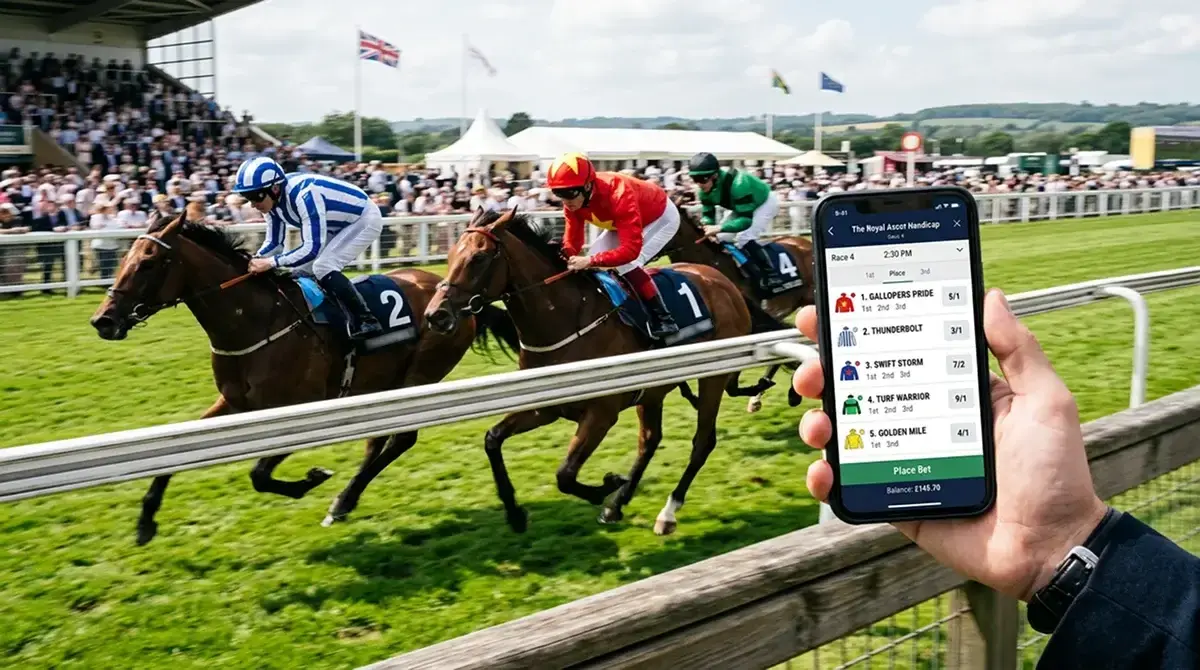
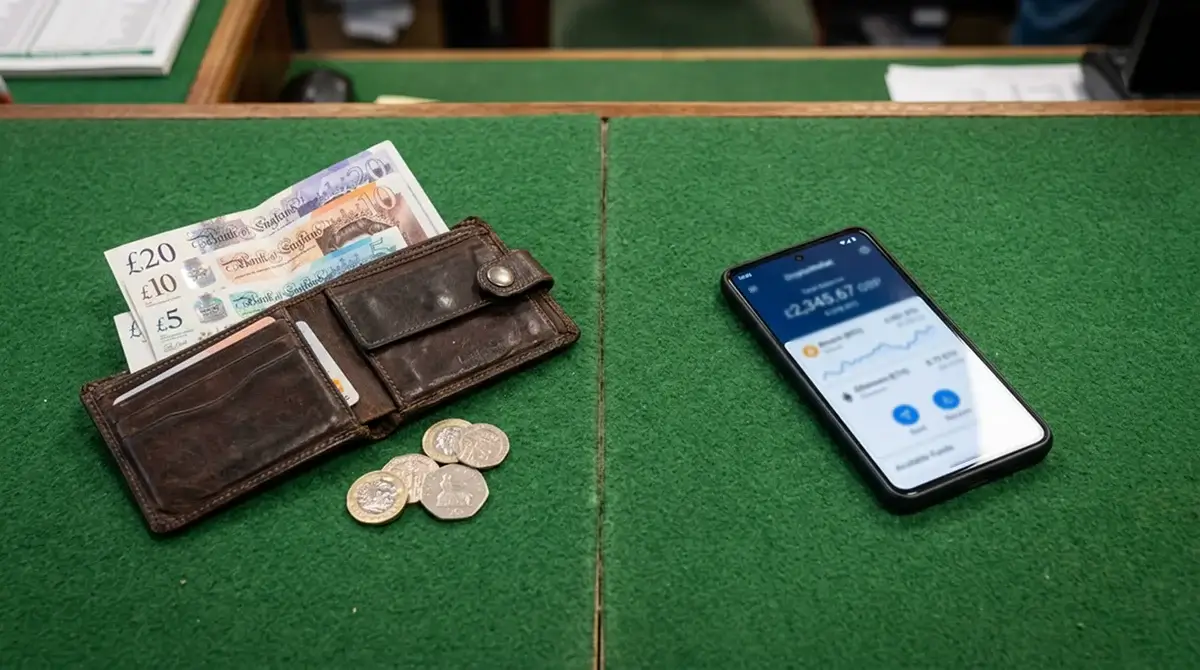
Bitcoin still commands roughly 66% of all crypto gambling volume, per Surgence Labs data from 2026. That dominance persists despite faster coins, cheaper networks, and stablecoins that eliminate volatility. The reason is simple: BTC is what most people own first. It is the default crypto holding, the one sitting in a Coinbase account from 2019 or a hardware wallet bought during the last bull run. When those holders want to bet on the 2:30 at Kempton, they reach for what they already have.
I have been placing BTC horse racing bets since 2020, and the experience has changed considerably. Platforms have improved, Lightning Network support has appeared on a few forward-thinking racebooks, and the practical challenges – confirmation delays, fee spikes, volatility between deposit and payout – are better understood. This article covers the BTC-specific landscape for horse racing bettors, from platform selection to the mechanics of actually getting your Bitcoin in and out of a racebook efficiently.
BTC-First Platforms With Horse Racing Depth
Not every crypto sportsbook that accepts Bitcoin offers meaningful horse racing markets. I have lost count of the platforms I have tested that list “horse racing” in their marketing only to reveal three virtual racing events and a single ante-post market for the Kentucky Derby. For UK punters, the test is straightforward: does the platform cover a standard Saturday UK card with at least win and place markets? Does it offer each-way? Are there ante-post options for major festivals?
The platforms that pass this test tend to be the larger multi-sport crypto sportsbooks rather than BTC-only niche operators. These broader platforms source their racing odds from established data providers and cover UK, Irish, French, and Australian meetings with reasonable depth. BTC-only platforms, the kind that launched as pure Bitcoin gambling sites, often focus on casino games and virtual sports, with horse racing as an afterthought.
When evaluating a BTC racebook, I check three things beyond market coverage. First, does the platform price bets in BTC or convert to fiat equivalent at deposit? A platform that holds your balance in BTC means your bankroll rises and falls with the Bitcoin price, independent of your betting results. A platform that converts to a fiat-denominated balance at deposit shields you from volatility but locks in the exchange rate at that moment, win or lose. Both models exist, and neither is inherently better, but you need to know which one you are using before you deposit.
Bitcoin Transaction Mechanics for Horse Racing Bets
Roughly half of all Bitcoin transactions are connected to gambling activity, according to CasinosBlockchain.io research from 2025. That level of demand means BTC gambling infrastructure is well-developed, but it does not eliminate the fundamental constraints of Bitcoin’s network architecture.
A standard BTC deposit requires one to three confirmations before a racebook credits your account. Each confirmation takes approximately ten minutes on average, though actual times vary with network congestion. During busy periods, after a major price move, during a mempool backlog, a single confirmation can take thirty minutes or more. If you are trying to fund your account twenty minutes before a race, BTC’s base layer is not a reliable option. I have missed more than one opening show price because my deposit was sitting at zero confirmations when the market opened.
Fees add another layer. Bitcoin transaction fees are determined by demand for block space, and they fluctuate dramatically. A deposit might cost $0.80 on a quiet Sunday evening and $12 during a market rally on a Wednesday afternoon. For a bettor depositing 0.002 BTC, roughly the equivalent of a typical session bankroll, a $12 fee represents a meaningful chunk of the stake. Timing deposits for low-fee windows, typically weekends and early morning UK hours, reduces this drag.
Subarna Biswas of Bitzo noted in 2025 that instant payout has become the new industry standard. Lightning Network deposits represent the closest BTC gets to that ideal. Lightning transactions settle in seconds with fees measured in fractions of a penny. A handful of crypto sportsbooks now accept Lightning deposits, and the experience is transformative, fund your account in under five seconds, place your bet, withdraw via Lightning after the race. The catch is adoption: as of mid-2026, Lightning support for horse racing deposits remains limited to a small number of platforms, and withdrawal via Lightning is even rarer.
Satoshi-Level Staking and Micro-Bets
One BTC advantage that gets overlooked is granularity. Bitcoin divides into 100 million satoshis, which means you can stake extremely precise amounts. A 10,000-satoshi bet at current prices works out to a few pounds – low enough for testing a new platform’s interface, exploring an unfamiliar meeting, or running a disciplined staking plan with very small units.
Minimum bet thresholds vary by platform, but several racebooks accept BTC wagers starting from 0.0001 BTC or less. This makes Bitcoin viable for low-stakes recreational bettors who want to experiment with crypto racing without committing a significant amount. It also suits systematic bettors who run high-volume, low-unit strategies across multiple races per day, where tracking performance in satoshis provides a clean, currency-neutral record of results over time.
The flip side is that small BTC bets are disproportionately affected by network fees. A $0.80 transaction fee on a $5 bet eats 16% of your stake before the race even starts. For micro-betting, Lightning Network or a stablecoin alternative makes more economic sense. Reserve base-layer BTC for larger session deposits that justify the fee, and batch your racing activity into fewer, bigger deposit-withdrawal cycles rather than moving small amounts on-chain for every session.
When BTC Works and When It Does Not
Bitcoin earns its place in horse racing betting for bettors who already hold BTC and want to use it without converting, for larger session deposits where network fees are a minor percentage, and for ante-post bets where confirmation speed does not matter. It struggles for time-sensitive live betting, micro-stakes wagering, and any scenario where the bettor needs funds credited in under five minutes. Understanding that boundary, and choosing BTC deliberately rather than by default, is the difference between a smooth experience and a frustrated one.
Do any crypto racebooks accept Lightning Network deposits for horse racing?
A small number of crypto sportsbooks now support Lightning Network deposits, which settle in seconds with negligible fees. Adoption is growing but still limited as of 2026, and Lightning withdrawal support is even rarer. Check the platform’s deposit page for a Lightning option alongside standard on-chain BTC before assuming it is available.
What is the minimum Bitcoin bet size for horse racing at most platforms?
Minimum BTC wagers vary by platform but typically start at 0.0001 BTC, roughly equivalent to a few pounds at current prices. Some platforms set higher minimums of 0.0005 BTC or more. The practical minimum is also shaped by network fees – very small bets on the base layer become uneconomical when transaction costs exceed a meaningful percentage of the stake.
Learn more about horse racing crypto betting on our main page.
You may also find Blockchain Betting Transparency: How It Protects Horse Racing Punters interesting.
Written by the editors at Horse Racing Crypto Betting.